Generous Orthodoxy  

The word ortho-doxy (Greek for "right doctrine") has both positive and negative connotations. In a culture that prizes what is iconoclastic and transgressive, orthodoxy has come to sound constricted and unimaginative at best, oppressive and tyrannical at worst.

The position taken on this website is that we cannot do without orthodoxy, for everything else must be tested against it, but that orthodox (traditional, classical) Christian faith should by definition always be generous as our God is generous; lavish in his creation, binding himself in an unconditional covenant, revealing himself in the calling of a people, self-sacrificing in the death of his Son, prodigal in the gifts of the Spirit, justifying the ungodly and indeed, offending the "righteous" by the indiscriminate nature of his favor. True Christian orthodoxy therefore cannot be narrow, pinched, or defensive but always spacious, adventurous and unafraid.
More about Generous Orthodoxy>

Latest News

Scripture Index Created for Fleming's Book

Posted: Tuesday, July 6, 2010

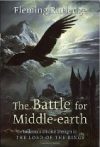
A pastor in Maastricht, Holland (where English is fluently read and spoken) has made a remarkable Scripture Index for The Battle for Middle-earth, Fleming's book about The Lord of The Rings.

"It is a revelation to me," she says; "I had no idea I had used so much Scripture from so many books of the Old and New Testaments. I am very pleased to realize that my Ring book is even more biblical than I knew, although that was my intention from the beginning."

Let's hope it stays in print until the Hobbit movie finally gets made! Here is the link:

http://homepage.mac.com/rc.vervoorn/rutledge_si.html


Upcoming Books...

Posted: Monday, February 1, 2010

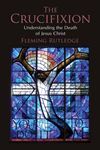
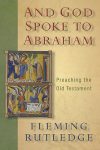
Fleming's long-awaited book about the Crucifixion has reached the stage of a completed first draft. Revising and editing the very large volume will take another year. In the meantime, Eerdmans is preparing a new volume of Fleming's Old Testament sermons for publication early next year, to be entitled The Lord Spoke to Abraham.


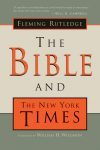
Dick and Fleming Rutledge are Featured Donors on NYTimes.com

Posted: Sunday, January 31, 2010

The New York Times Neediest Cases Fund selected Dick and Fleming to be among the donors featured on the Times website. The Rutledges gave a gift to the fund in honor of their fiftieth wedding anniversary.

See photos and listen to The Spirit of Giving online.

The site displays six donors; to see and hear the Rutledges, scroll down to the sixth.


Recent Ruminations

The power of apology
Wednesday, July 21, 2010

There are so many phony apologies these days ("I'm sorry if I offended anyone") that when a true apology occurs right in front of our eyes, it's worthy of celebration. This afternoon, the Secretary of Agriculture, Tom Vilsack, stood up at the podium in full glare of the media and repented of his misdeed in firing Shirley Sherrod. He did this in so complete and authentic a fashion that the tape could be used for years to come as a demonstration as to how it's done.

--He said that he, personally, had blundered badly, and he did not reach for any mitigating explanations..
--He did not attempt to shift blame to anyone else.
--He gave details: he said he had been too hasty, too quick to react, without ascertaining the full facts.
--He said that he should have dealt with the situation himself instead of relying on others.
--He said that he had learned a lesson that he'd have to live with for a long time.
--He spoke directly of Ms. Sherrod, describing something of what she had been through as a result of his mistake.
--He said that he had called her in person and that he had asked for her forgiveness (which, he said, she had extended to him)

It was an admirable performance in every way and one might wish it could be drilled into the population at large. We need to learn of the power of a genuine apology. In the New Testament, it's called metanoia-- repentance).


Read more and comment ...
Hero? The Great Escape
Saturday, July 3, 2010

Many people have complained about the overuse of the word "hero," especially since 9/11 when it became customary to refer to all the victims of the terrorist attacks as heroes. I thought about this during the past week, when Nico Smith died (see Tips on this website) and when I heard a lengthy interview on NPR about Dieter Dengler, who was the longest-held American to escape captivity (in Laos) during the Vietnam War. Christian Bale played Dengler in the movie Rescue Dawn, and a well-regarded documentary by Werner Herzog, Little Dieter Needs to Fly, tells the story also. Dengler's remarkable exploits are described in a new book, Hero Found, by Bruce Henderson. Henderson was interviewed at length on the Diane Rehm Show last week.

In one of my books I relate a conversation I had with a veteran of World War II who had won the Silver Star. He did not like to be praised or admired. He said this: "Nobody knows who deserves what." The more I think about this the more penetrating it seems to me to be. It is true Christian anthropology. Some people have more resilience, drive, stubbornness, energy, strength--whatever--than others, whether by nature or nurture. Certainly Dengler's capacities for survival must strike awe into almost everyone.

But at the end of the interview Henderson spoke of how Dengler later contracted ALS (Lou Gehrig's disease), one of the most dreaded afflictions in the world, and as a result took his own life. "Yes," said Henderson, pushed by Diane, seemingly reluctant to talk about it, "He did that. He couldn't escape." I haven't read Henderson's book, but this seemed significant to me. The urge to escape drove Dengler as other men and women are driven by other things, ranging from the urge to paint, write, or perform on the stage to a passion for running marathons, riding motorcycles, or collecting ever more sophisticated electronics. The urge to escape kept Dengler alive. (The group of men gathered in the Nazi camp in The Great Escape [based on an actual episode] were not a random collection. They had been sent to that camp because of their passion for escaping.)

Tony Judt, the noted public intellectual, has ALS. He cannot move a single muscle. He speaks only with artificial assistance. For the last few months, he has been dictating long pieces of commentary for The New York Review of Books, and his book Ill Fares the Land has recently been published. In the first two NYRB pieces, he described his condition in harrowing detail, making it possible for the reader to imagine--at least in part--what it is like to be imprisoned in an immobile body, unable even to scratch or find a comfortable position, let alone take care of himself. After that, he ceased to write of his condition, focusing all his attention on philosophical and ethical analysis of the issues of our time. It is by any standard an awe-inspiring achievement. Surely we can describe this as heroic.

But who knows who deserves what? Judt is driven to write and to think just as Dengler was driven to escape. Stephen Hawkings, who has had ALS longer than anybody, has been able to continue his world-class scientific work for decades. Both these men may have been blessed with psychic resources that apparently Dengler, in the end, did not have. We should be more careful, it seems to me, about the way we throw around the word "hero." Human nature is an astonishingly complicated affair. Every one of us is compromised in some way, and every one of us disappoints in some way.

Christian anthropology tells us that the only true escape from the prison of this world of Sin and Death is by the action God has performed for us from the other side of the locked door, from outside the prison wall, with a light greater than that of the watchtower with its searchlight forever seeking to expose us. Into this prison came Jesus Christ, to take his part as one of us, in order to do what we could not do for ourselves. He has granted us an everlasting escape into the great illimitable expanse of God's Kingdom where there will be no need for any more escapes because there will be life in abundance for all.

The Christian who chooses life instead of death, in whatever form that takes--whether fighting apartheid or bearing affliction with gallantry--bears witness to this Great Escape.


Read more and comment ...

Read All Ruminations>

Latest Tips From the Times

No man is an island
Friday, July 16, 2010

I try not to say this too often, but this really is a must-read article by Dan Barry about the "domino effect" of the Gulf oil hemorrhage. No incident is isolated. No misdeed can be encapsulated. No one is purely an individual; we are part of a network of relationships and dependencies. We are a human organism.

Can we find ways to answer the heart-breaking lament of Steve Airhart? He is the "work-hardened owner" of a small business in Waveland, Mississippi which has been undone by the spewing-oil catastrophe. He said to the reporter,
"I don't think the Lord's looking this way no more."

Here is the link:

http://www.nytimes.com/2010/07/16/us/16land.html?src=me&ref=general


Read more and comment...
A champion of language and baseball dies at 99
Monday, July 12, 2010

Few people in America today care half as much about diction, grammar, pronunciation, elocution, precision, and clarity as did the legendary "voice of the Yankees," Bob Sheppard (also known as the Voice of God). For fifty years he reigned and was everywhere admired for his announcing. He loved poetry and Shakespeare. He majored in English and speech at St John's University and earned a masters in speech at Columbia, eventually becoming an adjunct professor of speech at St John's.

He said, "I don't change my pattern. I speak at Yankee Stadium the same way I do in a classroom, a saloon, or reading the Gospel at Mass at St Christopher's."

Derek Jeter said, "He's as much a part of this organization as any player." Sheppard had died, but Jeter used the present tense. Long live language!

Here is a link to the main obituary. You will find there four other links to articles about Sheppard that everyone who cares about the English language will want to read:

http://www.nytimes.com/2010/07/12/sports/baseball/12sheppard.html?ref=obituaries


Read more and comment...
True courage: a Christian hero
Saturday, July 3, 2010

The Rev. Nico Smith died last week in Pretoria at the age of 81. Many Americans will never have heard of him, but he is worthy of the sort of respect accorded to military heroes. Indeed, the kind of courage required of Pastor Smith over many years is of a higher type. He had to renounce his entire Afrikaner background and heritage in order to join the struggle against apartheid. He and his wife gave up their comforts and security to live in a black township. His life and works bring honor to the name of Christ and to the Church in a time when there is much for Christians to be ashamed of.

There is much information about Nico Smith online, but there is a striking fact related in the New York Times obituary. One of the people most influential in encouraging Pastor Smith to move from his position of privilege to the frontier of danger was none other than Karl Barth. Here's the link:

http://www.nytimes.com/2010/06/25/world/africa/25smith.html?_r=1&scp=1&sq=nico%20smith&st=cse


Read more and comment...

Read All Tips from the Times >